
Continuous learning is undoubtedly one of the skills that make us better professionals. Those who remain curious, open to learning, willing to do things differently, and to implement new techniques and tools that optimize daily tasks have a competitive advantage over those who opt for a more passive attitude. Curiosity, whether innate or cultivated, is like a superpower that will make things a little easier in this ever-changing work environment, especially now that disruptive technologies like Big Data, Artificial Intelligence, and the Internet of Things are taking center stage. I’m sorry, but looking the other way is no longer an option. Therefore, this superpower—the ability to stay up to date and push beyond our comfort zone—is essential if we want to ensure our competitiveness in an increasingly demanding job market.
According to the McKinsey Global Institute’s “Jobs Lost, Jobs Gained” report, automation and artificial intelligence could force between 75 and 375 million workers worldwide to change occupations by 2030. We’re tired of hearing that many jobs as we know them will disappear, and that new ones will emerge in their place. If we suspect our own job may be on the verge of extinction, it would be wise to start asking ourselves some questions: How do I secure my place in the job market? What skills do I need to avoid falling behind? How can I continue to add unique value in my role?
If you ask me, the answers lie in your willingness to learn and your ability to adapt to change, or, in other words, in curiosity and resilience. This is precisely where concepts like “reskilling” and “upskilling” come into play.
Reskilling, or retraining, involves learning entirely new skills to perform a different job; that is, acquiring new knowledge that will open doors to a new role or profession.
On the other hand, upskilling, or skills improvement, consists of perfecting or expanding skills within the same professional field; it would be an evolution within the same professional position.
The pressure we feel to stay on top of the latest advances and trends can be slightly overwhelming, especially at a time when progress is moving so fast that it’s hard to keep up; what we learned a month ago can be obsolete the next. Therefore, it’s crucial to be practical and seize the opportunities available to us. How? By consciously investing our time and effort, and by focusing on our individual goals and professional circumstances. The aim is to ensure a tangible return, whether it’s increased practicality, efficiency, and/or, why not, the personal satisfaction of learning something new.
In addition to all this, we cannot forget our soft skills, which we must continue to strengthen and which, incidentally, never go out of style or become obsolete. Just as disruptive technologies rise to the top of the “must-do” pyramid, so too must our most human skills: leadership and team management, adaptability to change, teamwork, emotional intelligence, critical thinking… At the end of the day, new technologies will replace repetitive tasks, but by no means will they replace the human element, because understanding emotions, managing relationships, discerning how to make decisions in ambiguous contexts—in short, our ability to add value in complex environments—requires transversal skills that, at least for now, AI cannot replicate.
Take your time and ask yourself, without rushing or putting pressure on yourself, what you can do to become a better professional in your job? What hard or soft skills can you start developing or continue to develop further to give your career a boost? What skills do you admire in colleagues, managers, or friends that you would like to develop yourself?
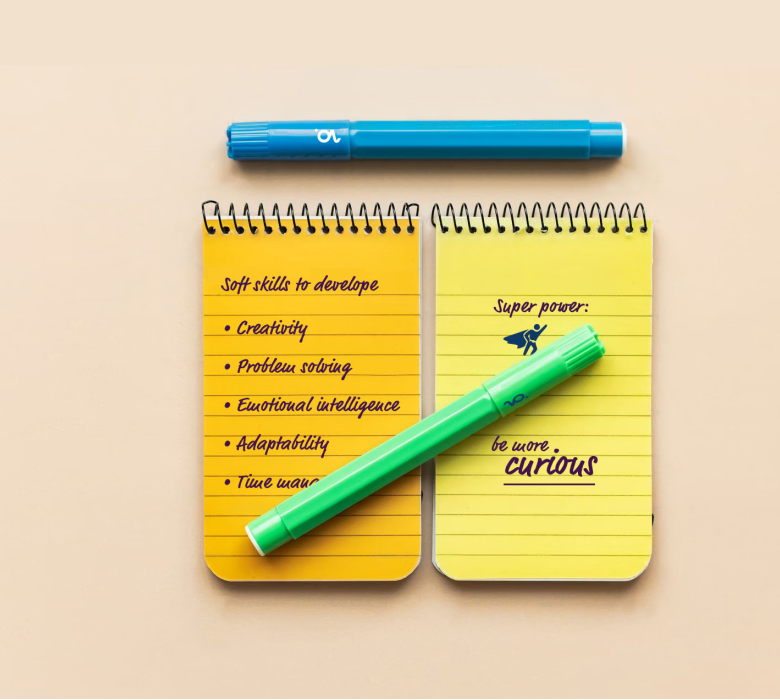
Although it might sound a bit cliché, it’s never too late to continue learning and developing. All we need is the desire to push ourselves a little beyond our comfort zone and nurture that curiosity within us. I invite you to grab a pen and paper and make a list of the skills and competencies you think can help you become a better professional. From all of them, choose at least a couple you’d like to focus on this year and outline a brief plan for how you can achieve your goal.
You can start small by familiarizing yourself with new tools or by exploring online courses on topics that interest you. You can also begin with a specific need that has arisen within your team or department and that you’d like to take on as a professional challenge.
In this way, you’ll be cultivating your curiosity—a soft skill in itself—which will always be a valuable asset, while adding new knowledge to your repertoire.
In today’s world, it seems difficult to make predictions about anything, but one thing is certain. If you put your curiosity to work, you’ll become a version of yourself much better prepared to overcome the challenges that come with change. We don’t need to have all the answers, but we do need to explore, experiment, and learn to ensure, at the very least, that we’re willing to ask all the questions.